Infective endocarditis occurs when germs, usually bacteria, enter the bloodstream and settle on the lining of a heart valve. The resulting collection of germs and clot material, called a vegetation, can stop the valve closing properly, allow the infection to spread into the surrounding tissue, or break off and cause a stroke.
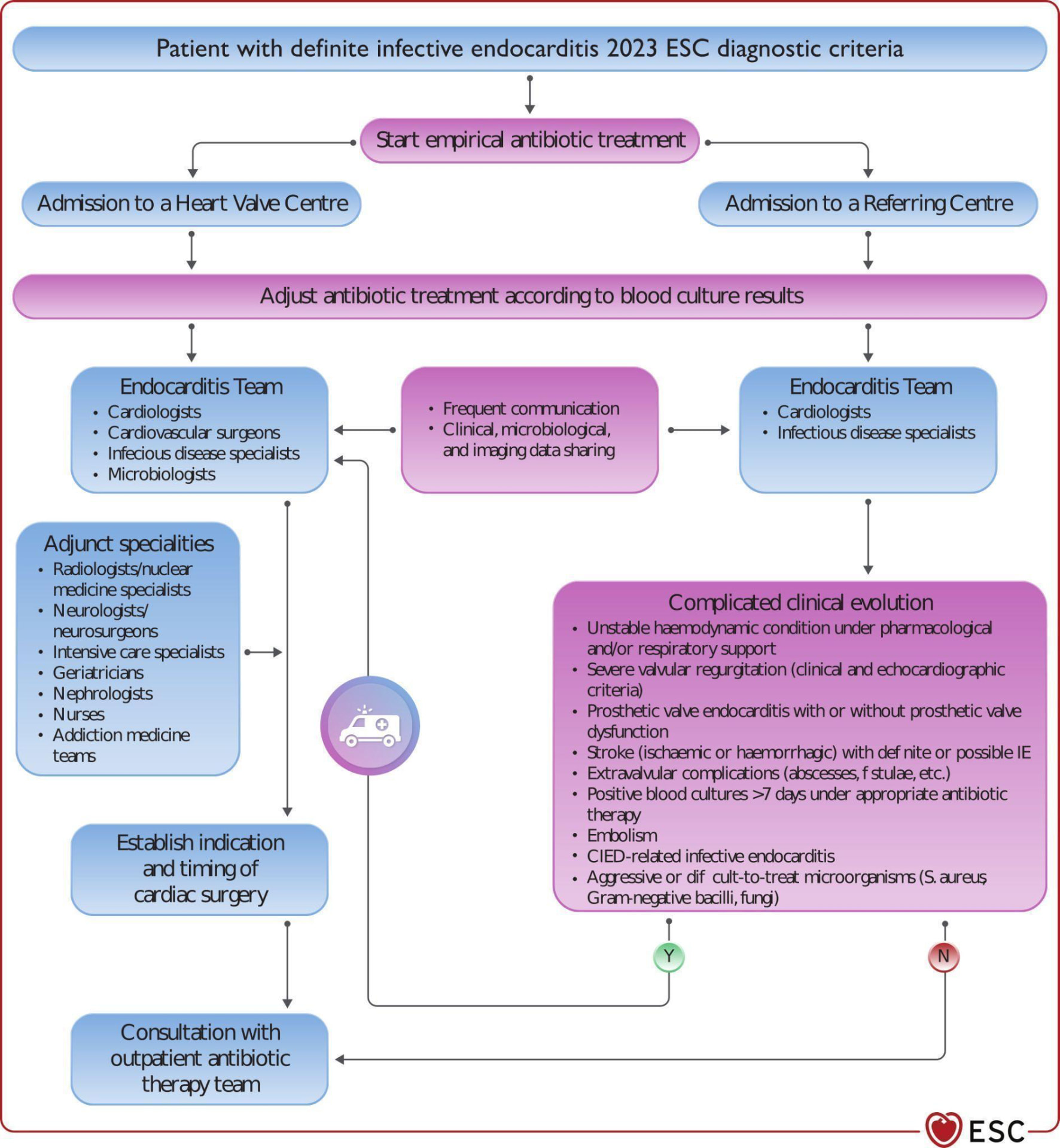
Treatment usually begins with several weeks of antibiotics given through a drip, closely monitored in hospital. The team follows repeat blood tests and heart ultrasound scans to see how the valve and the infection are responding.
Surgery is considered when antibiotics do not control the infection, when valve damage causes heart failure, when the vegetation is large enough to pose a risk of stroke, or when the infection has spread to form an abscess around the valve.
The operation removes the infected tissue and any vegetation, then repairs the valve where possible or replaces it with a mechanical or tissue valve. If the infection has weakened the supporting structure of the heart, this is rebuilt with patches of suitable material.
Antibiotic treatment continues after the operation for a period set by the team caring for you, with repeat scans and blood tests to confirm the infection has cleared. Follow-up reviews and, where needed, long-term preventative antibiotics are arranged.
If endocarditis is suspected or you have been told you may need an operation, a specialist review of your scans and records will confirm whether surgery is suitable and what it would involve.