
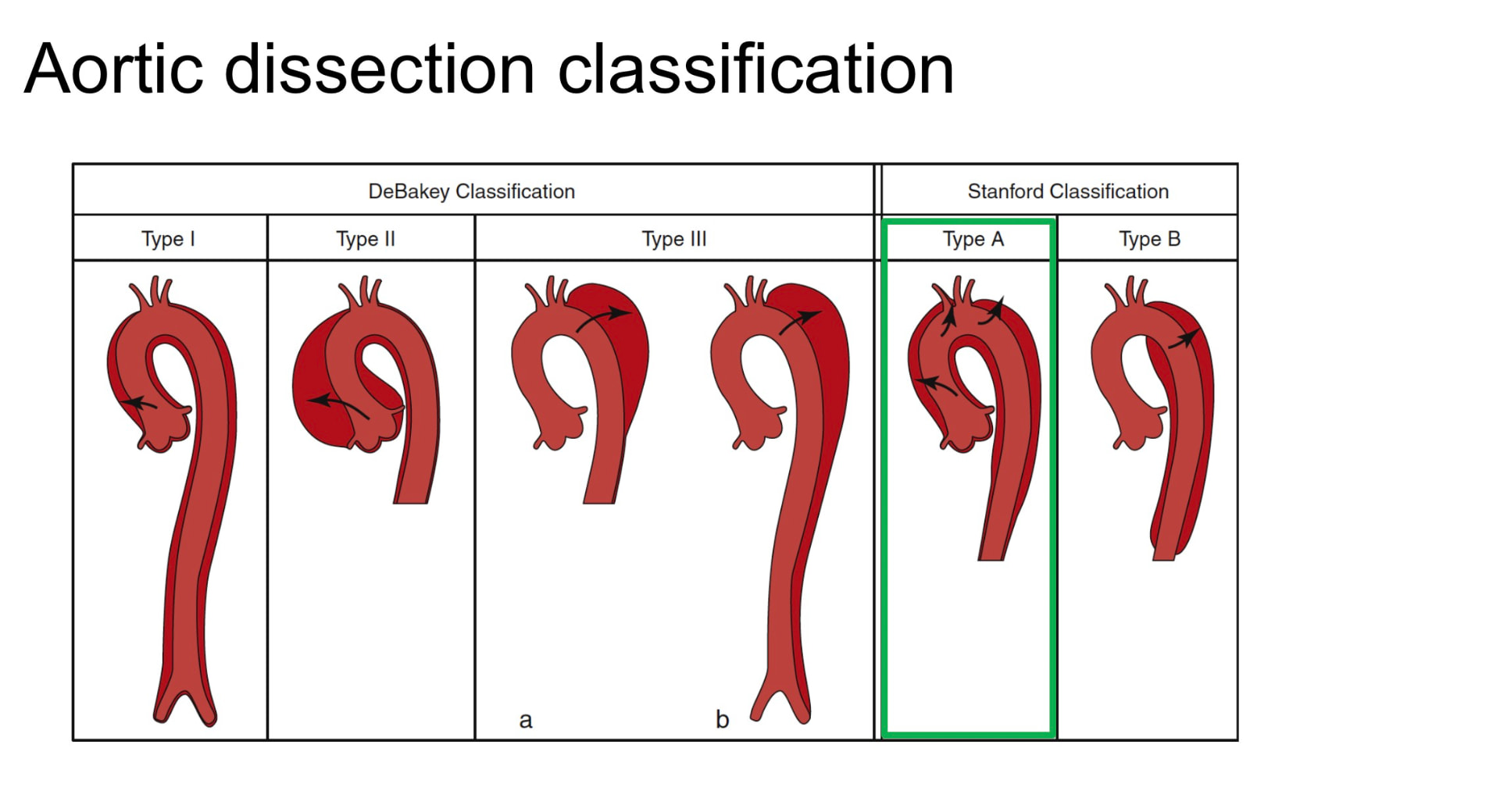
The aorta is the main artery carrying oxygenated blood from the heart to the rest of the body. Its wall consists of several layers. Aortic dissection occurs when blood enters between these layers, creating a false channel within the vessel wall.
A Stanford Type A dissection involves the ascending aorta, irrespective of whether the dissection extends into the aortic arch, descending thoracic aorta or abdominal aorta.
The condition can compromise the aortic valve, coronary arteries, blood supply to the brain and circulation to other vital organs. Type A dissection is particularly dangerous because the affected aorta lies immediately adjacent to the heart and pericardial cavity.
The condition can deteriorate suddenly, even when the patient initially appears stable. Four major complications explain the urgency.